
Plantar Warts: A Guide to Causes, Treatment, and Prevention

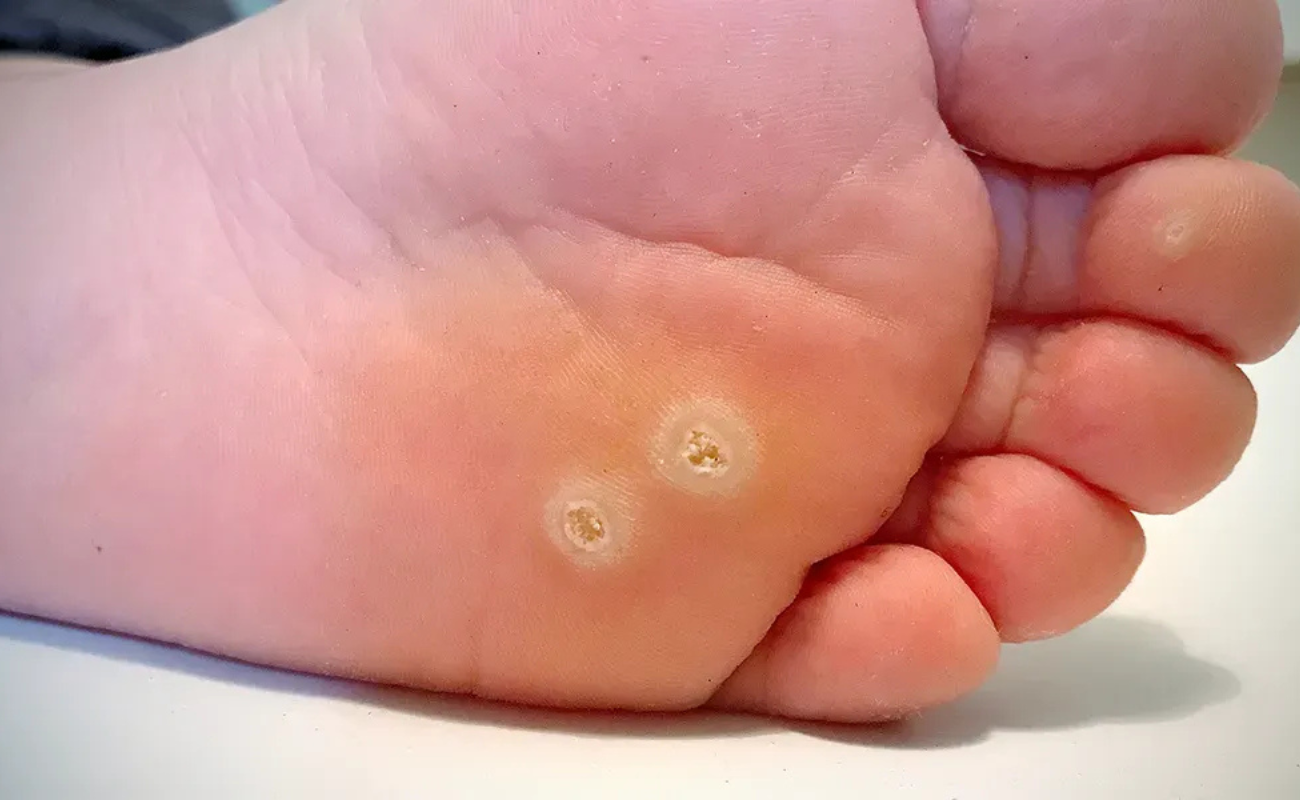
Plantar warts are a common dermatologic condition affecting the soles of the feet. Although benign, they can cause significant discomfort—especially when located on weight-bearing areas like the heel or ball of the foot.
What Are Plantar Warts?
Plantar warts are caused by infection with the Human papillomavirus (HPV), specifically strains that infect the outer layer of the skin. Unlike other warts, they grow inward due to pressure from walking and standing.
Clinical Features
Plantar warts may present as
Rough, thickened skin on the sole
Small black dots (“seed warts”) representing clotted capillaries
Pain or tenderness when walking or standing
Lesions that interrupt normal skin lines
Plantar warts are often mistaken for corns or calluses, but their pinpoint bleeding spots and pain with side-to-side pressure help distinguish them.
Risk Factors
Individuals that may be susceptible include:
People who walk barefoot in public areas (pools, locker rooms)
Individuals with weakened immune systems
Those with breaks in the skin barrier
HPV thrives in warm, moist environments, making communal spaces a common source of transmission.
Diagnosis
Diagnosis is typically clinical, based on appearance and physical examination. In uncertain cases, a provider may pare down the lesion to reveal characteristic bleeding points. Rarely, a biopsy may be obtained.
Treatment Options
Many plantar warts resolve spontaneously, but treatment is often needed due to pain or persistence.
1. Over-the-Counter Therapy
Salicylic acid preparations gradually remove infected skin
Requires consistent application for weeks
2. Cryotherapy
Liquid nitrogen freezes the wart
Performed in a clinic setting every 2–3 weeks
May cause mild pain or blistering
3. Other Medical Treatments
Laser therapy
Immunotherapy (stimulating immune response)
Minor surgical removal (for resistant cases)
Treatment choice depends on severity, patient preference, and response to prior therapies.
Complications
While generally harmless, untreated plantar warts may lead to:
Chronic pain affecting mobility
Spread to other areas of the foot
Formation of clusters (mosaic warts)
Prevention Strategies
Preventive care focuses on reducing exposure and strengthening skin protection:
Wear footwear in public showers and pools
Keep feet clean and dry
Avoid picking at warts (prevents spread)
Do not share personal items like towels or shoes
When to See a Doctor
Seek medical attention if:
The lesion is painful, bleeding, or rapidly growing
You are unsure if it is a wart
You have diabetes or poor circulation
The wart persists despite treatment
Key Takeaways
Plantar warts are caused by HPV and occur on weight-bearing areas of the foot
They may resolve spontaneously but often require treatment
First-line therapy includes salicylic acid or cryotherapy
Prevention is key, especially in communal environments
If you think you may have a plantar wart and need to see a doctor. Visit us at oasisrockmedical.com to schedule an appointment or call 682 882 6060.