
Screening Tests You Shouldn’t Skip in 2026 – 6


Regular health screenings help detect conditions early, when they are easier to treat.
Regular screenings save lives.
Stay proactive, Stay Ahead of Your Health.
Schedule your checkups today.
Regular health screenings help detect conditions early, when they are easier to treat.
Regular screenings save lives.
Stay proactive, Stay Ahead of Your Health.
Schedule your checkups today.
 Regular health screenings help detect conditions early, when they are easier to treat.
Regular screenings save lives.
Stay proactive, Stay Ahead of Your Health.
Schedule your checkups today.

Regular health screenings help detect conditions early, when they are easier to treat.
Regular screenings save lives.
Stay proactive, Stay Ahead of Your Health.
Schedule your checkups today.

Regular health screenings help detect conditions early, when they are easier to treat.
Regular screenings save lives.
Stay proactive, Stay Ahead of Your Health.
Schedule your checkups today.

Regular health screenings help detect conditions early, when they are easier to treat.
Regular screenings save lives.
Stay proactive, Stay Ahead of Your Health.
Schedule your checkups today.
Regular health screenings help detect conditions early, when they are easier to treat.
Regular screenings save lives.
Stay proactive about your health.
Stay Ahead of Your Health.
Schedule your checkups today.
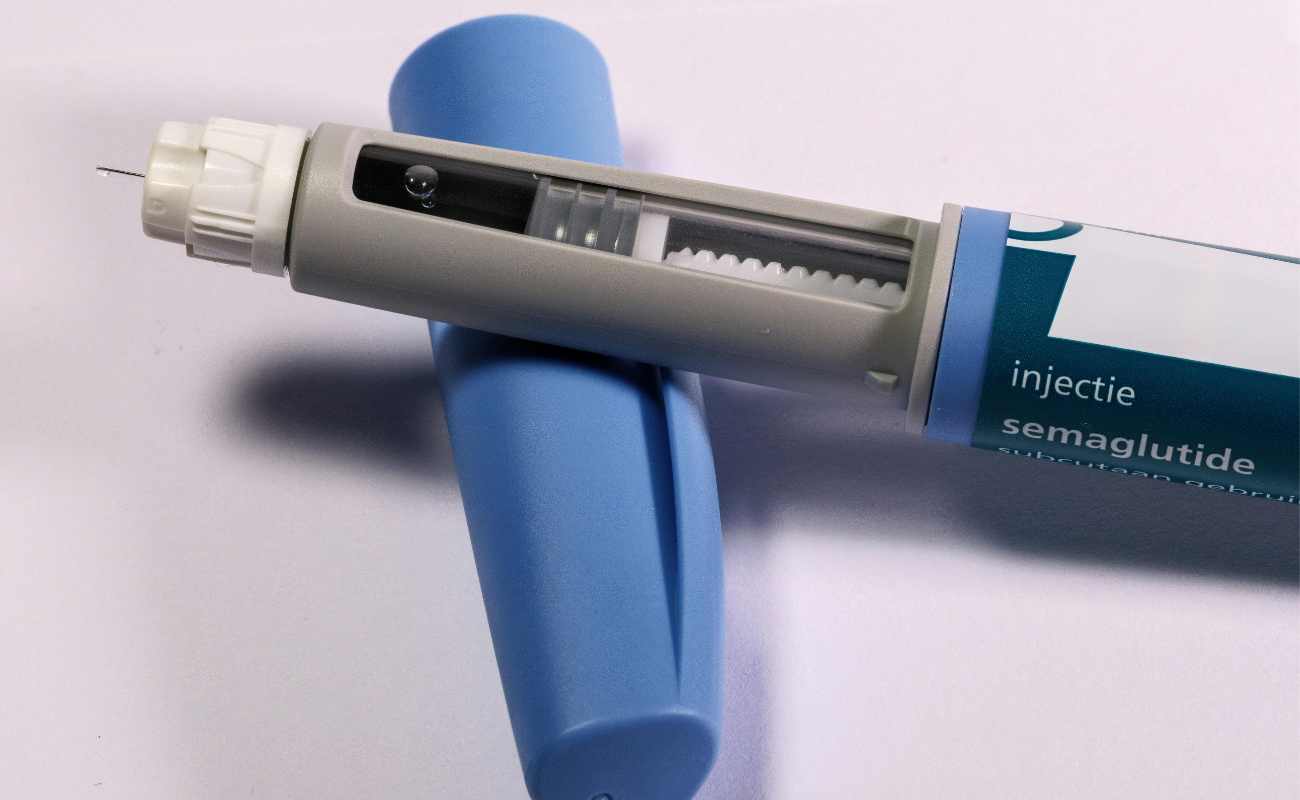
GLP-1 (Glucagon-Like Peptide-1) is a naturally occurring hormone in the body that plays a key role in blood sugar control, appetite regulation, and digestion. In recent years, GLP-1 medications have gained widespread attention for their effectiveness in weight loss and type 2 diabetes management.
Popular GLP-1 drugs such as Ozempic®, Wegovy®, Mounjaro®, and Zepbound® are now among the most searched health topics online, and for good reason.
GLP-1 receptor agonists mimic the body’s natural GLP-1 hormone and work in three main ways:
This combination makes GLP-1 medications highly effective for sustainable weight loss and metabolic health improvement.
Clinical studies show that GLP-1 medications can help patients lose 10–20% of their body weight, depending on dosage and adherence. Unlike traditional diet pills, GLP-1 drugs target the biological drivers of hunger, not just willpower.
Because of these benefits, GLP-1 weight loss treatments are increasingly prescribed by medical professionals.
Here are some of the most well-known GLP-1 drugs:
Each medication varies in dosage, effectiveness, and approved use, so it’s important to consult a healthcare provider.
GLP-1 medications are FDA-approved and generally safe when prescribed appropriately. However, they may cause side effects such as:
Most side effects are mild and improve over time. GLP-1 drugs may not be suitable for individuals with certain thyroid or gastrointestinal conditions.
You may be eligible for GLP-1 therapy if you:
GLP-1 medications are reshaping how we approach obesity, diabetes, and metabolic disease. Ongoing research suggests future benefits in heart health, inflammation reduction, and long-term disease prevention.
As demand continues to grow, GLP-1 therapy is becoming a cornerstone of modern weight management.
GLP-1 medications represent a breakthrough in weight loss and metabolic health. By addressing hunger at a hormonal level, they offer a powerful, science-backed solution for patients seeking lasting results.
If you’re considering GLP-1 treatment, visit us at OasisRock Medical Centre to explore your options safely and effectively.
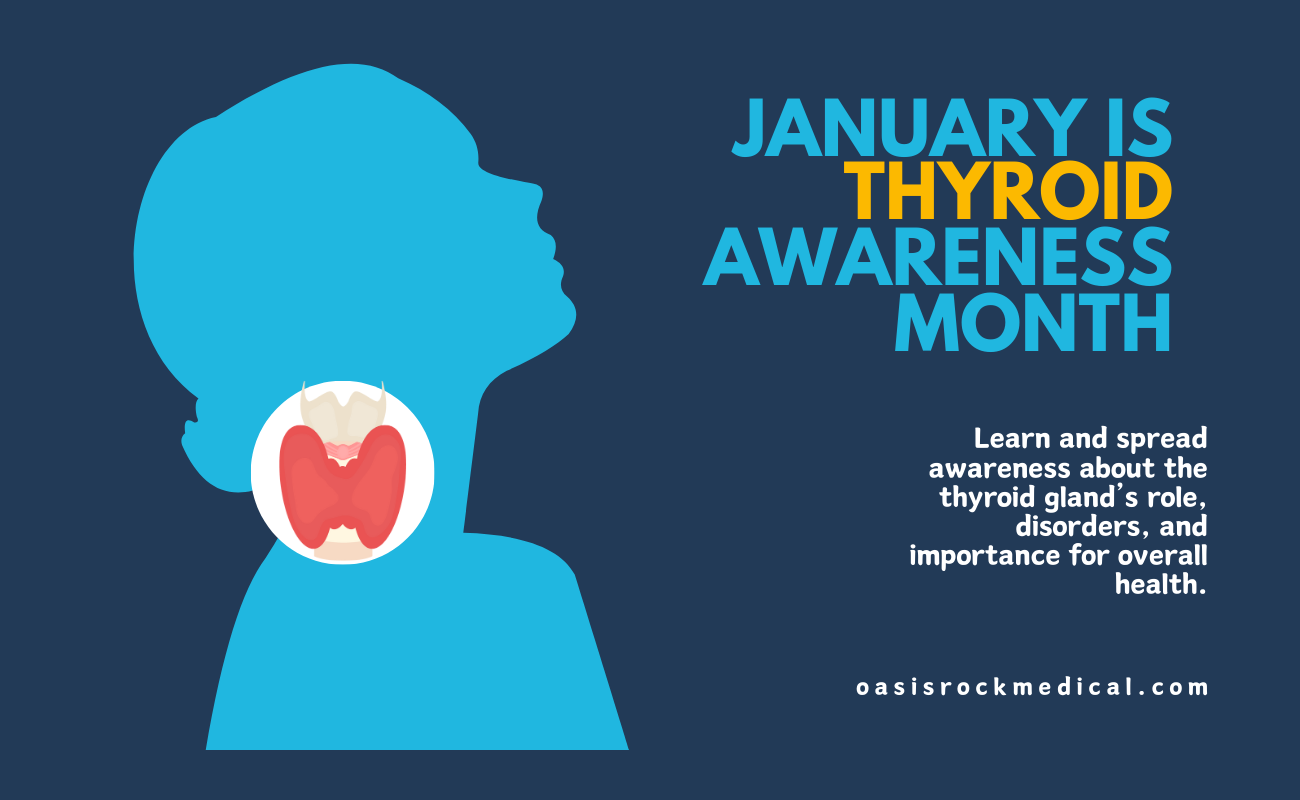
January is Thyroid Awareness Month, a time to raise awareness about thyroid health and the importance of early diagnosis. At OasisRock Medical Centre in Arlington, TX, Primary Care Physician Dr. Anozie helps patients identify and manage thyroid conditions before they lead to long-term health complications.
The thyroid gland plays a vital role in regulating metabolism, energy levels, heart rate, mood, and hormone balance. Because symptoms can be subtle, many thyroid disorders go undiagnosed for years without proper testing.
What Does the Thyroid Gland Do?
The thyroid is a small, butterfly-shaped gland located at the base of the neck. It produces hormones that influence nearly every system in the body, including:
When thyroid hormone levels are too low or too high, multiple systems in the body can be affected and the body can quickly fall out of balance.
Common Thyroid Conditions We Diagnose
Symptoms may include fatigue, weight gain, depression, cold intolerance, dry skin, and hair thinning.
Symptoms may include anxiety, weight loss, rapid heartbeat, heat sensitivity, tremors, and sleep disturbances.
An autoimmune condition and the most common cause of hypothyroidism.
An autoimmune disorder that causes hyperthyroidism.
Often benign but require proper evaluation and monitoring by a healthcare provider.
When to See Your Primary Care Physician
You should consider thyroid testing if you experience:
Supporting Thyroid Health Year-Round
In addition to medical care, supporting thyroid health may include:
Always consult your primary care physician before starting supplements or making treatment changes.
Thyroid Awareness Month is the perfect time to take control of your health. If you’re experiencing any of the above symptoms or need routine screening, schedule an appointment with Dr. Anozie at OasisRock Medical Centre in Arlington, TX.
Early diagnosis leads to better outcomes and improved quality of life.
January is Cervical Cancer Awareness Month aka the perfect time to give your cervix a little extra appreciation. The good news? Cervical cancer is one of the most preventable cancers thanks to modern screening.
Why Screening Matters
Most cervical cancers are caused by HPV (human papillomavirus). HPV is very common and usually harmless but when it sticks around, it can cause cell changes. Screening finds those changes early, before cancer develops.
No symptoms? That’s normal. That’s why screening is so important.
The Newest Screening Recommendations
Start at Age 25
If you have a cervix and are at average risk, start screening at 25.
Best Test: HPV Test
HPV test every 5 years is now the preferred option
It looks directly for the virus that causes cervical cancer
New Option: Self-Collection
Some people can collect their own vaginal sample for HPV testing
This can be done in a clinic - and in some cases, at home
If the result is normal, you repeat screening in about 3 years
Other Acceptable Options
If HPV testing isn’t available:
HPV + Pap test (co-test): every 5 years
Pap test alone: every 3 years
Any screening is better than none!
When Can Screening Stop?
You can usually stop around age 65 if:
Your recent tests were normal
You’ve had regular screening over the years
Your healthcare provider can help decide what’s right for you.
What If a Test Is Abnormal?
Take a deep breath - abnormal does not always mean cancer.
Next steps may include:
A closer exam of the cervix (colposcopy)
Removing abnormal cells
More frequent follow-up testing
These steps prevent cancer from ever forming.
The Big Takeaway
Cervical cancer is highly preventable
Screening saves lives
New options make screening easier than ever
This month, do one simple thing for your health: check if you’re up to date on screening and encourage someone else to do the same.
Your cervix will thank you.
New Guidelines for cervical cancer screening were put out in late 2025. Breaking down new vs old guidelines:
Old Guidelines | New Guidelines | |
Screening Start Age | Start screening at age 21 mainly with Pap tests. | Start screening at age 25 for average-risk individuals. |
Preferred Screening Tests & Intervals | Pap test (cytology) alone: every 3 years starting at 21. Or HPV + Pap (co-test): every 5 years beginning around age HPV test alone was not deemed the main preferred option yet. | Primary HPV testing alone is now the preferred method every 5 years for ages 25–65. Self-collection of HPV sample: This is a new option that allows people to collect their own vaginal sample (at home or in the clinic, and if the result is negative, can be repeated every 3 years. Co-test (HPV + Pap) every 5 years: still acceptable if primary HPV testing isn’t available. Pap test alone: every 3 years only if other tests aren’t available. |
When to Stop Screening | Stop at 65 if prior screenings were normal over the last 10 years. | Still stop around 60–65, but with clearer criteria which include Two negative primary HPV or co-tests before age 65. Or Three negative Pap tests in a row by age 65, If HPV/co-testing is not available. |
Summary of the Breakdown
✅ Screening begins later - age 25 instead of 21 for most people.
✅ HPV testing is now preferred, not Pap smears.
✅ Self-collection for HPV is a new option, expanding access.
✅ Stopping rules are more detailed, especially around negative HPV tests.

A new year brings a fresh start and there’s no better time to focus on your health. While many people set resolutions around fitness or diet, true wellness begins with comprehensive, ongoing medical care.
At OasisRock Medical Centre, we believe “New Year, New You” is about building healthy habits that last all year long.
The start of the year is an ideal time to book a general health check-up. Routine visits help identify potential concerns early and give you a clear picture of your overall wellbeing. From blood pressure and cholesterol checks to chronic condition management, preventative care plays a key role in staying healthy and active.
At OasisRock Medical Centre, our team is committed to providing patient-centred care for individuals and families. Whether you’re managing an existing condition, updating your vaccinations, or simply wanting reassurance that your health is on track, our experienced medical professionals are here to support you.
The new year is also a great opportunity to focus on mental wellbeing, sleep, and lifestyle balance. Stress, fatigue, and burnout can quietly affect your quality of life. Our clinic takes a holistic approach to healthcare, helping patients address both physical and mental health concerns in a supportive and professional environment.
Rather than chasing short-term resolutions, we encourage setting realistic, sustainable health goals. Small steps - like regular check-ups, healthier routines, and open conversations with your doctor - can lead to lasting improvements.
This year, make your health a priority. Let OasisRock Medical Centre be your partner in health as you step into the new year feeling confident, supported, and ready to rock it!
New year. New you.
Let's rock the year with OasisRock!

Join Our Newsletter